

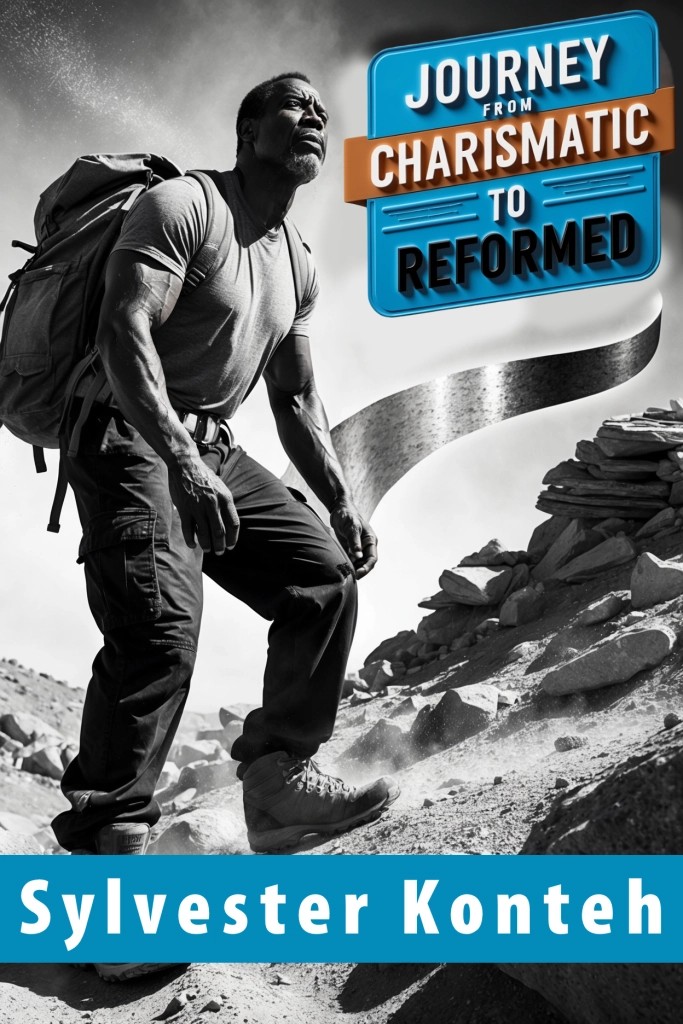
Sylvester Konteh, Journey From Charismatic to Reformed
Ettrick Press
The Rev. Sylvester Konteh (pastor of Brikama RPCS in The Gambia) knows first-hand about the charismatic movement and seeks to reach out to those who are caught up in its errors.
Konteh starts with a heavily biographical introduction. This is not only interesting and encouraging but serves as a great way of addressing his target audience, including those hurting as a result of charismatic teaching.
He boasts of the real comfort that the Reformed faith provided his wife when battling depression and addresses charismatics with humility and earnestness. This serves as the only appropriate foundation from which to launch into such a delicate and controversial subject.
However, Konteh maintains the right balance. Having humbly and earnestly appealed to his readership, he is bold in his criticism. He is unafraid in asserting that charismaticism is not ‘another flavour’ or simply ‘a matter of preference’, but sin. Through chapters 1 to 7, Konteh persuasively critiques the theological errors of the movement: from ‘tongues’ to the cult of celebrity pastors, testing them against Scripture.
Konteh addresses many underlying issues of great importance, reintroducing the reader to the sovereign, triune God of Scripture. He also insists that being Reformed is more Biblical, and more spiritual, not the reverse (i.e. the absence of ‘tongues’ and ‘miracles’ is not simply a result of hard-hearted closedness to the supernatural).
Some might say that Konteh is too ambitious. However, he certainly has a hearty faith and trust that the Spirit of God is at work right now and that we may expect him to work powerfully in all kinds of people, including those tied up in the charismatic movement, like his former self. Konteh doesn’t seem to think that there’s any reason why the Lord might not do the same for countless others. I agree, and we should never settle for mediocrity. But these things do take time and investment, and I’m sure he did not become an RP overnight.
The largest chapter of the book is dedicated to the Lord’s Supper. Whereas I’m sure that Konteh’s testimony of the wild abuses of this ordinance amongst charismatics is entirely accurate, and certainly highlights the need for radical reformation, I can’t help but think that this chapter was just too much.
If a person can be brought, by God’s grace, to a much better grasp hermeneutics, the doctrine of God, and soteriology, then issues of sacramentology and worship will fall into place in good time, as we minister to and disciple them after they have seen the errors of charismaticism and have gained a firm foundation through reading the book
Konteh addresses these issues, but having stretched himself too far in dealing with sacramentology (including the finer details of administration), he doesn’t quite do them justice. He introduces his chapter on hermeneutics really well, and his initial critique is good, but what the chapter is missing, amongst other things, is a demonstration of the point at hand. He gives an example of charismatic eisegesis but neglects to walk the Pentecostal layman through a proper and accessible exposition of a passage of scripture. The 20+ pages spent on the Lord’s Supper could have been better used to do exactly this. The result is that, at least in my estimation, neither good Hermeneutics nor the topic of the Lord’s Supper are done justice.
Would I recommend this book to others? Yes, but I think that it is more suited to Reformed laymen in equipping them “to prayerfully and practically take steps to help those who are still in bondage to false doctrines or under the influence of false prophets.” It serves as a great introduction to the movement for those unfamiliar with its nuances.
Oscar Denton
