

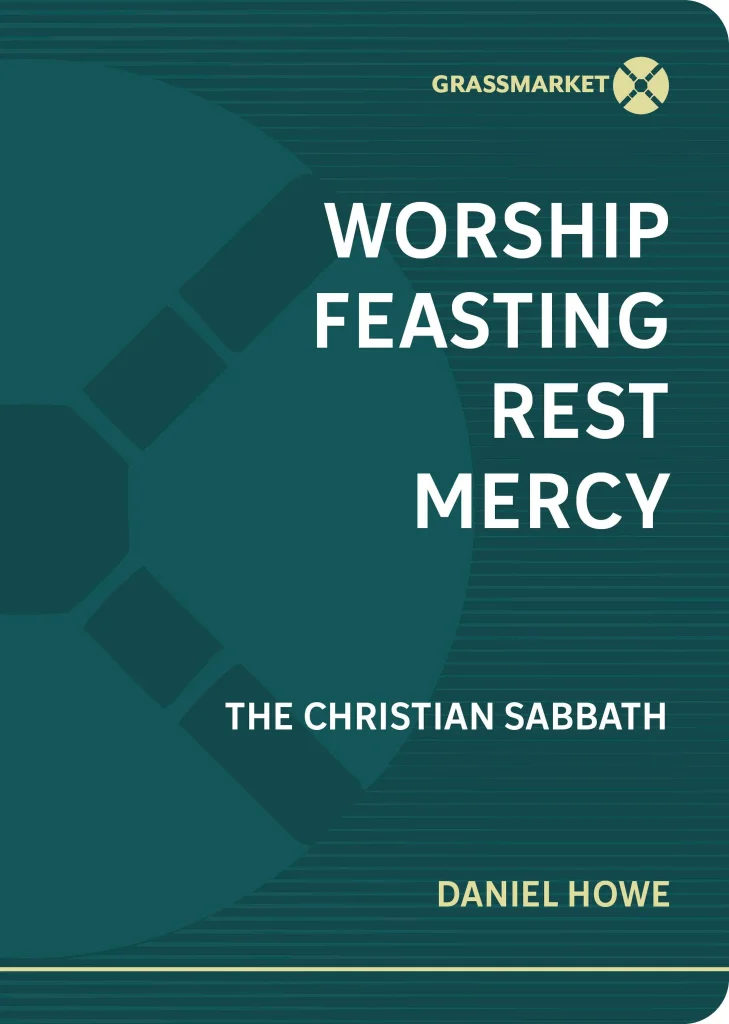
Daniel Howe, Worship, Feasting, Rest, Mercy: The Christian Sabbath
Grassmarket Press, 2023, pbk, 213 pages, $10.00
It was the Reformer, John Calvin, who famously stated with reference to the salvation of sinners: we are saved by faith alone, but the faith that saves is never alone – it is accompanied by a life of new obedience. That may lead a recently converted Christian to ask the question – “to what am I to be obedient?”
The answer to that question is concisely answered in two statements in the Westminster Shorter Catechism (answers to questions 40 and 41)
- “The rule which God at first revealed to man for his obedience, was the Moral Law” (Answer 40)
- “The Moral Law is summarily comprehended in the Ten Commandments.” (Answer 41)
These Ten Commandments provide the moral framework by which the young Christian and those not so young are to order their lives in gratitude to Christ for his so great salvation. But what about the 4th Commandment? In recent decades a few Reformed and Evangelical leaders, have come up with the novel theory that the 4th Commandment is no longer applicable in the New Covenant era in which we live. One theologian as famously or infamously describes it as having been ‘nullified’ by Jesus and the apostles.
It is against this background that this book by Daniel Howe is exceedingly timely and also exceptionally helpful.
The underlying premise of this entire publication is that the Sabbath law, having been engraved on tablets of stone by the finger of God, is still a legitimate and important aspect of the Moral Law.
Howe’s book is divided into 2 parts.
- Part 1: Sabbath Why?
- Part 2: Sabbath How?
Part 1 is subdivided into 5 chapters as is Part 2 of the book.
The initial chapter provides a fascinating glimpse of what life was like for the Israelites in Egypt. Life was characterized, particularly in the latter period, with constant labour under the supervision of cruel taskmasters. Freedom came when, under the mighty hand of God, they were released from bondage, set free to serve the one true and living God. Not only was the Lord a kind and loving Master, but he stipulated that his people would have one day in seven to Rest. (the 4th Commandment). Exodus 20:8-11 points forward to the freedom and rest Christ grants to those who are liberated by him from the bondage and tyranny of Satan and sin. (Matthew 11:28-30, John 8:36)
The third chapter informs the reader about Jesus and the Sabbath. It points out how Jesus restored the Sabbath to what it was always meant to be, a day of blessing for mankind, to be enjoyed to the glory of God and not a day laden with the heavy burdens imposed on its observance by rigid Rabbinical rules. Far from dispensing with the 4th Commandment, Howe points out that Jesus restored the Sabbath to its divinely intended position and purpose, within God’s redemptive plan for redeemed humanity. Jesus had the authority to do that for “The Son of Man is lord of the Sabbath” (Luke 6:5)
Part 2 of the book is extremely helpful as the author considers the practicalities of how the Sabbath is to be observed. The chapter titles are suggestive of aspects of Sabbath observance which the author believes are biblically mandated: Worship, Feasting, Rest, Mercy and Ebenezer. This last chapter title may raise a few eyebrows. What has the Ebenezer (stone of help) of 1 Samuel 7:12 to do with Sabbath keeping? Daniel Howe explains his rational:
“The Sabbath is our Ebenezer: a hard-edged, rugged testimony to the fact that salvation is of the Lord. One day a week we lay aside our tools, wash off the sweat, stop pursuing our agendas, and feast and sing in honor of God”
I have read many publications on the Christian Sabbath, but this book I consider to be the best. Its foundation rests on carefully examined Biblical texts. It relates extremely well to the culture in which we live. It avoids the kind of pitfalls that the Pharisees fell into. It provides a positive and challenging application of the 4th Commandment for believers in our society, and also for unbelievers who are, spiritually speaking, still in the bondage of Egypt. Highly recommended.
Rev. Prof. Robert L. W. McCollum
