

John M. L. Young, Missions: The Biblical Motive and Aim.
Pittsburgh: Crown and Covenant Publications, 2007. Pp. 157. $14.00, paper.
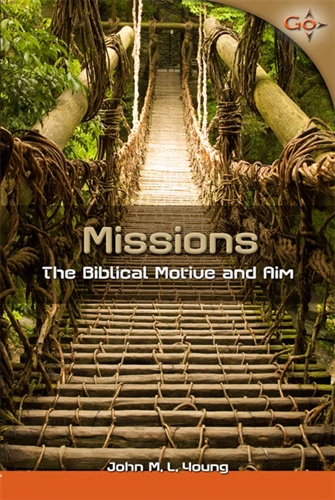
John M. L. Young’s Missions: The Biblical Motive and Aim, originally published as a series of pamphlets titled The Motive and Aim of Missions by World Presbyterian Missions in 1964, is a hidden gem for anyone interested in the work of missions.
While recent years have seen the publication of numerous textbooks and articles on missiology, many of these works unfortunately reduce the study of missions to mere cultural anthropology, comparative cultural studies, or comparative religious studies, often with Biblical references tacked on as an afterthought. For seminary students, Herman Bavinck’s An Introduction to the Science of Missions, published in 1960, has long been considered the gold standard of missiology textbooks. However, in this review, I wish to commend John M. L. Young’s work for its readability and compact size, making it accessible to anyone interested in engaging with missionary work or understanding and praying for the global mission of the church.
John M. L. Young was born in Korea in 1912 to Canadian Presbyterian missionary parents. His family later moved to Kobe, Japan, where he completed his education at the Canadian Academy. Young then pursued theological studies at Westminster Theological Seminary in Philadelphia from 1935 to 1937, before transferring to Faith Theological Seminary, where he graduated in 1938. In the same year, he was both licensed and ordained to the ministry. Young’s early ministry included serving as the organizing pastor of the Bible Presbyterian Church in Wilkes-Barre, Pennsylvania, from 1942 to 1948. Afterward, he and his wife moved to Nanking, China, to continue their missionary work, but they were forced to leave the country when the communists took over in 1949. This led to one of Young’s most significant periods of ministry, beginning in 1949 in Japan, where he served until 1966. Following the merger of denominations, he continued his ministry in the Reformed Presbyterian Church Evangelical Synod and later in the Presbyterian Church in America after the two bodies united.
Young’s book is organized into three main sections: The Foundations, The Confrontation, and The Destination.
- The Foundations:
The first section, consisting of three chapters titled The Basis, The Presuppositions, and The Commissions of Missions, lays the groundwork for understanding the mission of the church. Young emphasizes the indispensable role of the church in missions, arguing that the Great Commission in Matthew 28 inherently views mission work as the church’s enterprise, to be led by its officers and supported by its ordinances—namely, the Word, sacraments, prayer, and discipline. This section is crucial as it builds the theological foundation for missions, highlighting the church’s central role and the Biblical mandate for its involvement in the missionary enterprise.
- The Confrontation:
The second section addresses the practical challenges missionaries face in the field, divided into four chapters: Communication and Missions, Elenctics and Missions, Identification and Accommodation, and Church, State, and Missions. Drawing from his extensive experience in Japan, Young discusses the unique difficulties that missionaries may encounter in different cultural contexts. While these challenges vary across cultures and nations, Young stresses the importance of understanding local cultures and histories, as well as recognizing how God’s common grace has been at work in these contexts. At the same time, he underscores the necessity of discerning the specific areas within a culture that require repentance and transformation through the truth of the gospel. This section provides valuable insights for those on the mission field, offering practical guidance on how to navigate the complexities of cross-cultural ministry while remaining faithful to the Biblical truth.
- The Destination:
The third section, titled The Destination, explores the ultimate goal of mission work: the establishment of indigenous, self-governing, and self-supporting churches. Young’s discussion in this section is particularly insightful for understanding the practical challenges that arise in the later stages of mission work. He addresses the importance of developing churches that are culturally rooted yet Biblically faithful, capable of sustaining themselves without ongoing foreign support. For the Reformed Presbyterian Church, which has mission works around the world, each at different stages of development, this section offers critical guidance on how to pray for and support these missions as they move toward greater maturity and independence.
Mission work is not a human invention but a clear and precise command found in Scripture. The fundamental question, therefore, is not what we need to preach, but how we ought to preach the gospel in different cultural contexts. We should not contextualize the content of what we proclaim, for there is one body and one Spirit, one hope, one Lord, one faith, one baptism, one God and Father of all, and one truth (see Eph 4:4-6).
Mission work is not about imposing a so-called “Christian” Western culture on developing nations, which would amount to a form of cultural imperialism. Instead, local cultures and histories should be respected, recognizing that God’s common grace has been at work in these contexts. However, this respect for local culture must never lead to compromising the truth of the gospel. The message we proclaim remains essentially the same, regardless of where or when we preach it. The real challenge lies in discerning how the kingship of Christ should be applied and lived out within each nation’s unique cultural and historical context. How should people in each nation live as God’s people under the Covenant of Grace? This is the fundamental question that drives the work of missions.
In conclusion, I encourage those reading this review to seriously consider whether they might be called to serve in mission work. Even if you determine that you are not called to serve as a missionary yourself, there remains a vital role in supporting missions through prayer. As you pray for the mission work taking place around the world and for those who are laboring in these fields, I recommend reading this book and other valuable resources that can equip and inspire you to support the global mission of the church. Young’s “Missions: The Biblical Motive and Aim” offers both theological depth and practical wisdom, making it an essential resource for anyone committed to the work of missions.
Yusuke Hirata
Pastor of Kasumigaoka RPC, Kobe, Japan
