

J. Gresham Machen, A Biographical Memoir by Ned B Stonehouse
Banner of Truth Trust, 2019, 606 pages, £17.50
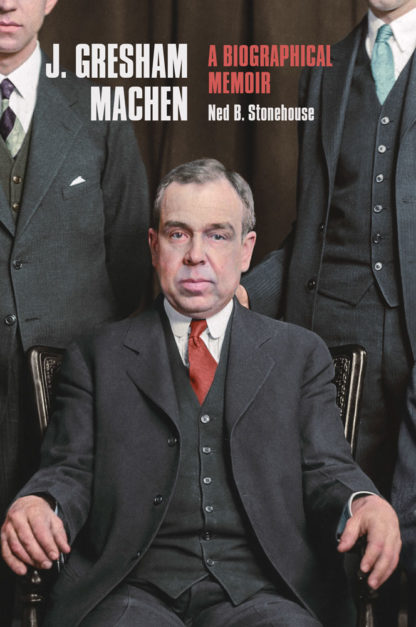
Christian biographies are of immense value to the Christian Church, not only because of the facts revealed concerning the persons under review, but also because of the insights gleaned from the times in which they lived. Ned Stonehouse the author of this biographical memoir on John Gresham Machen does this in a most interesting and informative way.
This reviewer was first introduced to Machen 50 years ago when beginning his training for the gospel ministry at the Reformed Theological College. Among the books set as prescribed reading by Prof. F.S. Leahy, the Prof. of Systematic Theology, was ‘Christianity and Liberalism’ by Machen. As Machen’s book reveals he was on the vanguard of those who were defending the Christian faith against the insidious attacks being made by the Liberals. It says something for the popularity and usefulness of this book that it is still in print, having been first published over 100 years ago.
The author of this biography, Ned B. Stonehouse, was well qualified to compile it. Not only was he a graduate of ‘Old Princeston’ in 1927, but he served alongside Machen from 1929 in the New Testament department of the newly established Westminster Theological Seminary.
John Gresham Machen was born in Baltimore on 28th July 1881 to Webster Machen and Mary Jones Gresham. Machen grew up in a home in which the culture and values of the ‘Old South’ were deeply cherished. Of much greater importance was the devout Christian faith which young Machen observed from both sides of his parentage, the Machens and the Greshams, values which were exemplified in the lives of his parents.
It could be said of Machen, as was said of Moses, that “he was no ordinary child”. For example, we read that at 12 years of age he was familiar with the contents of the Bible, including the names and character of all the kings of Israel and Judah. In his childhood he had committed to memory the questions and answers of the Westminster Shorter Catechism. Later in life he would attribute his love for and attachment to the Reformed Faith to this nurturing in the doctrines of grace so succinctly stated in the Catechism. Next to the Bible the Pilgrims Progress was a favourite in the Machen home and as a young boy Gresham became familiar with its contents. After a distinguishing career at school and university he graduated with a B.A. degree in 1902.
After much thought and prayer Machen decided to enrol as a student in Princeton Theological Seminary. Princeston, having been established in 1812, had gained the reputation of ‘standing for the rugged, undiluted Calvinism of the Westminster Standards’. Our biographer gives us a fascinating insight into the members of the faculty, men like BB Warfield, Caspar Wistar Hodge, Geerhardus Vos and William Brenton Green, whose teaching had a profound impact upon young Machen.
After excelling as a student at Princeton, Machen continued to pursue theological study in Germany in places like Marburg and Göttingen. This of course necessitated the mastery of the German language, which proved no difficulty to young Machen. In Marburg the Professor of Theology was Wilhelm Herrman. He was intellectually brilliant but theologically liberal. As our biographer informs us he was very capable of making a profound impact upon his students. He informs us that ‘Herrmann made liberalism wonderfully attractive and heart gripping’.
For a time Machen was spellbound by this brilliant erudite theologian. Thankfully, as our biographer informs us Machen was eventually to see: ‘that the Christ to whom Herrmann was fervently devoted never really existed and that religious experience is not as such, self-validating’. Machen’s experience in Germany, while extremely unsettling, providentially prepared him for the major battles he was to wage in defense of the Reformed Faith in the USA.
On Machen’s return from Germany, he was appointed ‘Instructor in the New Testament Department at Princeton’. Although the appointment was only for one year, this was the beginning of 23 years at the foremost Reformed Seminary in the U.S.
What this reviewer found intriguing was the way in which Liberalism slowly and imperceptibly gained control of Princeton. This reached the point in 1929 when Machen, and those who stood with him, resigned their positions at Princeton, at great personal cost, and banded together to found Westminster Theological Seminary.
Machen’s difficulties were not over because the Presbyterian Church USA, in which Machen was a minister, suspended him from office. This led Machen to secede and, along with others, establish in 1936 the Orthodox Presbyterian Church. This occurred only a few months before Machen suddenly died, in January 1937 at the age of 55.
Other aspects of Machen’s life which give us fascinating insights into this remarkable man are: his very close relationship with his parents, especially his mother, who only predeceased him by a few years; his ability as a lecturer, preacher, and author, which made him a much loved and highly respected servant of Christ in Bible believing circles; his service in France, during the 2nd World War with the YMCA, where he ministered to the troops both physically and spiritually.
John Gresham Machen may not have lived a long life, but he lived a full life to the honour and glory of his Saviour. In doing so he has left behind a legacy which is of immense value to the church in the 21st century. We are still facing the subtle attacks of liberalism, but with the help of Machen and the Lord whom he trusted and served, we will triumph over this insidious enemy that has corrupted many churches.
Rev Prof Robert L W McCollum, Woodstock RP Church in Belfast
